

Opinion: Foreign countries:The global epidemic has eased + high inflation + strong employment, the Fed is more hawkish . (1) The global epidemic has eased: As of April 4, the number of daily confirmed cases of COVID-19 in the world has dropped by about 500,000 in the past two weeks, to about 1.3 million per day. The number of newly diagnosed cases in South Korea and Vietnam, the “focus points” of the North Asian epidemic, dropped by 17% and 23% respectively from a week ago (7-day moving average). The 7-day average number of newly diagnosed cases in Hong Kong, China fell to 5,481, about the level around February 22. Singapore, Canada, and Australia have cancelled (or are about to cancel) the nucleic acid testing requirements for completing the entry of vaccinated persons. The recovery of overseas traffic and travel indicators has been accelerated since February, but there is still a certain gap from the same period in 2019 - the number of TSA air security checks in the United States and the number of global business flights are about 11% lower than the same period in 2019. (2) The conflict between Russia and Ukraine has eased: At present, the situation in Russia and Ukraine is still the core variable that disturbs the global market. At present, the conflict between Russia and Ukraine is still in a stalemate, but it has eased. The supply of commodities is expected to improve slightly. The price of crude oil futures has dropped recently, and the risk of stagflation has eased marginally . . (4) In the short term, inflation will continue to be high + strong non-agricultural data will continue to “strengthen” the Fed's interest rate hike expectations. The latest data on federal funds rate futures implies expectations of 45bp/44bp/40bp rate hikes in May, June, and July respectively, and a total of 243bp of rate hikes are expected this year (including the 25bp that the FOMC has raised in March).
Domestic: (1 ) Macro liquidity: Steady growth and continued efforts, with particular attention to the development of real estate and local bailout policies; (2) Funding: The current market is still dominated by existing funds, and it is difficult to achieve sustained hot spots in the short term, from rebound to reverse. The key to the turnaround is the inflection point of the interim report. (3) Market valuation: The A-share market valuation is at the median level, which is attractive compared with other major markets. However, the current demand for safety of international funds is greater than the demand for profit. (4) The intensification of the local epidemic continued to suppress consumption and logistics activities, and long-term vacation travel was almost stagnant. Industrial production has been deeply affected. The price of crude oil fell slightly, and the price of domestic industrial products remained relatively high. Pork prices rebounded slightly. Pay attention to the development of the epidemic in Shanghai, Jilin and other places, as well as the dynamics of relief policies.
In terms of A50, the index rebounded at the support level and ushered in a good start in April. However, the hot spot of A-shares is difficult to sustain, and individual stocks fall more and rise less. Real estate and financial sectors led gains. As the domestic epidemic situation is relatively severe and has a greater impact on the economy, the policy of stabilizing growth is worth looking forward to. However, considering the uncertainty of the Russian-Ukrainian conflict and concerns about stagflation, overseas funds showed a net outflow . From a technical point of view, it is currently building a bottom at a support level. In operation, it is recommended to sell high and buy low.
Figure 1 Year-to-date stock index ups and downs
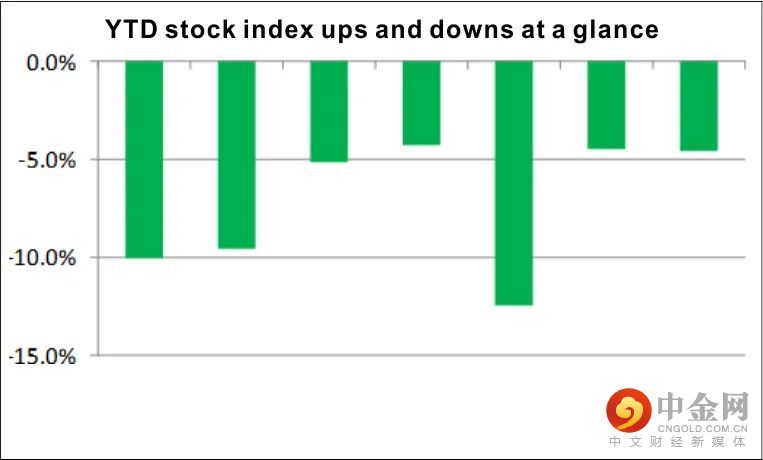
Data source: Henghua International, wind
Figure 2 List of ups and downs last week
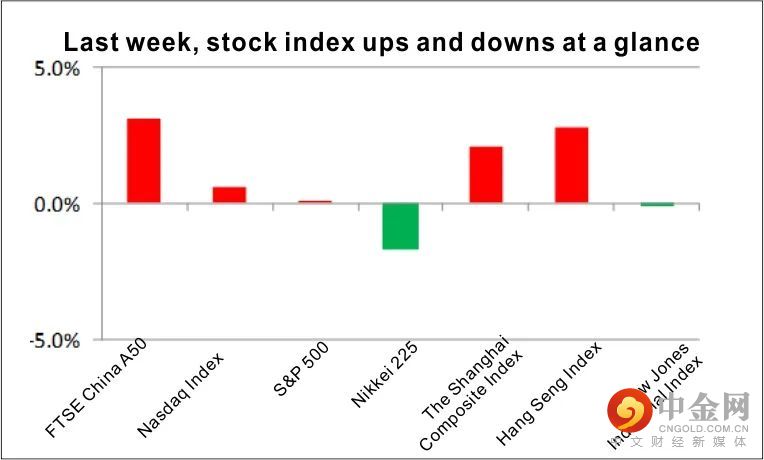
Data source: Henghua International, wind
1.Technical analysis
From a technical analysis point of view, the support point for the A50 index is 1 3344. The current market hot spots are not sustainable, and it is expected that in the next period of time, there is a high probability that a bottoming market will start near the support point.
Figure 3 FTSE China A50 trend
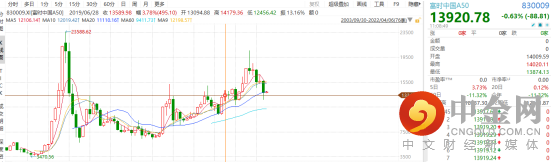
Data source : Henghua International , wind
2.Plate trend
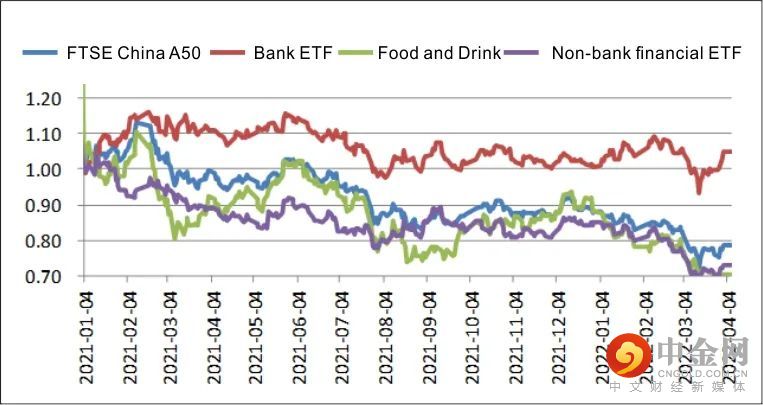
Figure 4 Trends of the three major sectors of the FTSE China A50 Index
Data source: Henghua International, wind
Last week, the A50 bottomed out. Among the three major sectors, the food and beverage sector rose 2.5 %, the non-bank financial sector rose 3.4 % , the banking sector rose 5.4% , and the A50 futures contract rose 3.7 % overall.
3. Funding
In terms of public offerings, compared with last week, the position of stock funds increased, and the share of newly established stock-oriented funds decreased; compared with last week, northbound funds saw net outflows from mainland stock exchanges, and the trading activity increased; compared with last week, leveraged funds, The scale of the balance of the two financing and financing decreased, and the transaction activity decreased; industrial capital, the net reduction of industrial capital was narrowed, the transaction activity increased, and the net increase in the communication and household appliances was the top.
4.Index Valuation
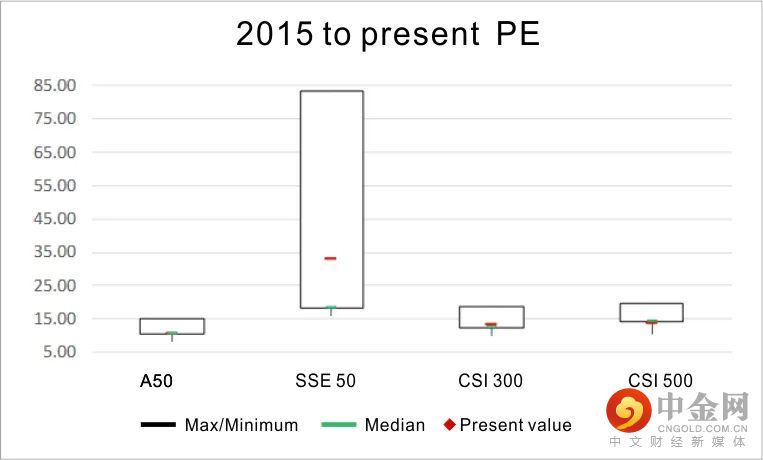
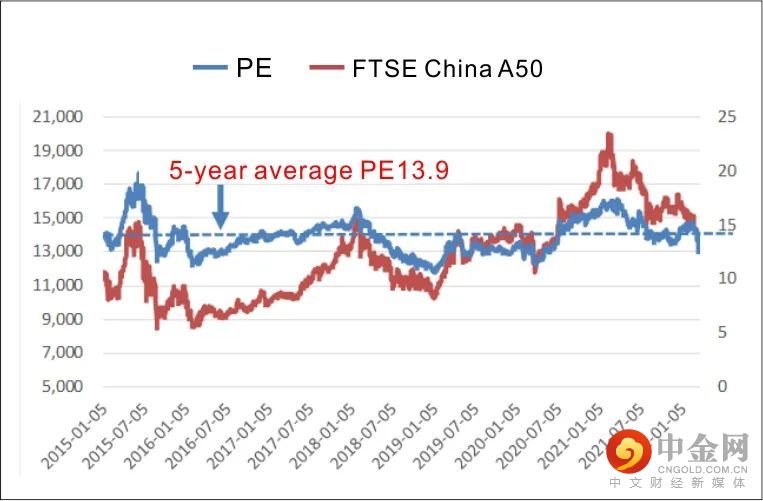
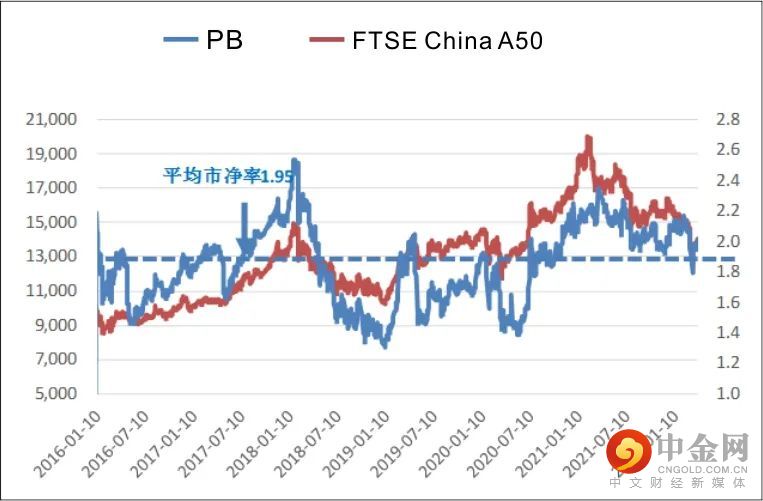
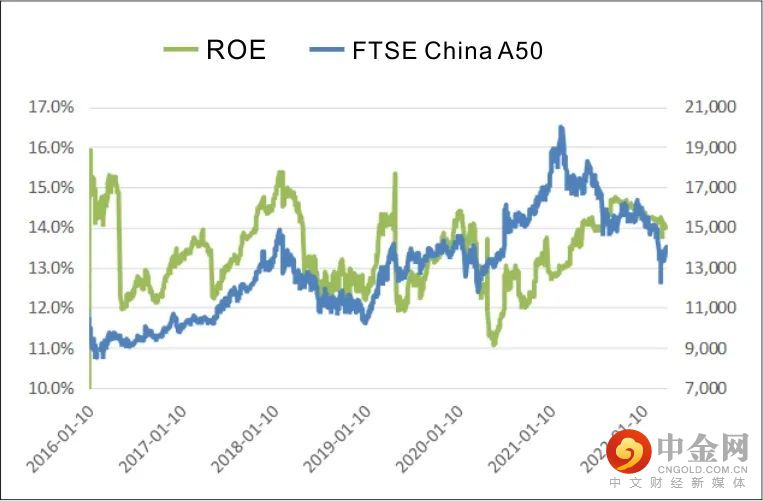
In the past five years , the average value of PE is 13.9 times , and the average value of PB is 1.95 times . But since 2019 , its valuation has rebounded from a low level and has risen all the way . The current PE is 14.34 times , which is in the 65% quantile; 2.01 times PB , which is in the 75% quantile in 6 years . Compared with the Shanghai Stock Exchange 50 and the CSI 300 Index, the ROE of the A50's return on equity is larger, and the current value is 14 .
Calculation formula : price-earnings ratio PE (TTM) = 1/SUM (Wi/PEi), price -to-book ratio PB (TTM) = 1/SUM (Wi/PBi) , return on equity ROE = PB/PE .
Figure 5 PE of each index from 2015 to present
Data source: Henghua International, wind
Figure 6 A50 PE ratio
Data source : Henghua International , wind
Figure 7 A50 P/B PB
Data source : Henghua International , wind
Figure 8 A50 ROE
Data source : Henghua International , wind
5.Spread Analysis
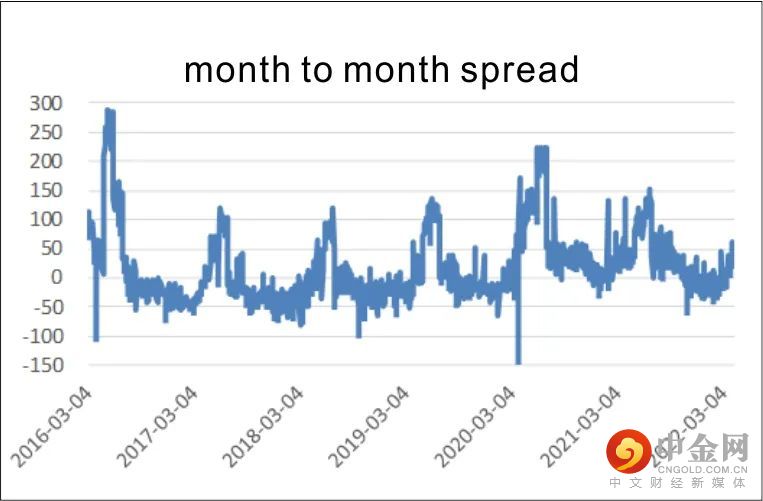
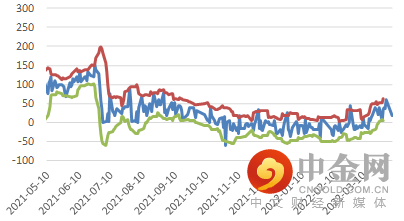
Monthly spread: Last week, the upper and lower bounds of the Bollinger Band of A 50-month spread: [ -62,15], it is suggested that the spread can break through this range for arbitrage.
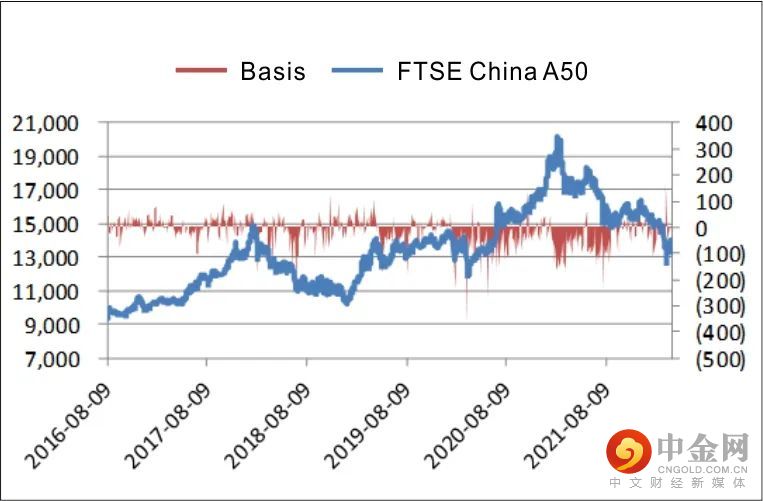
Figure 9 A50 Basis Chart
Data source : Henghua International , wind
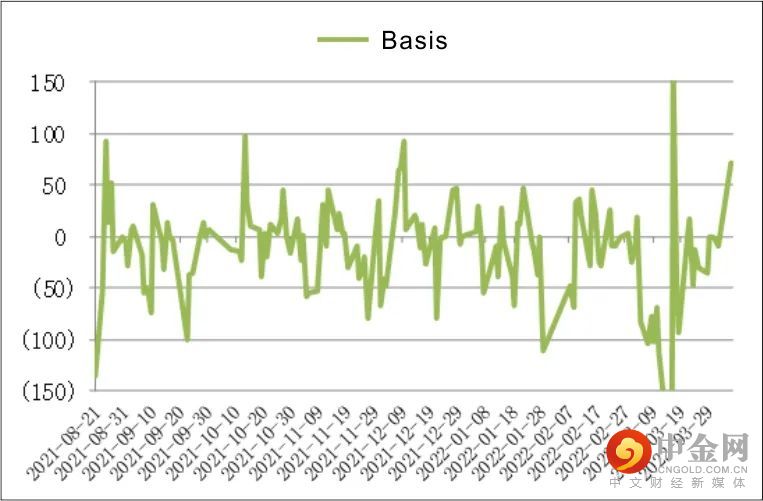
Figure 10 A50 basis chart (five months data)
Data source : Henghua International , wind
Figure 11 A50 month-to-month spread
Data source : Henghua International , wind
Figure 12 Application of Bollinger Bands in monthly spreads
Data source : Henghua International , wind
6.Trading straregy
One-sided strategy: In terms of A50, the index rebounded at the support level and ushered in a good start in April. However, the hot spot of A-shares is difficult to sustain, and individual stocks fall more and rise less. Real estate and financial sectors led gains. As the domestic epidemic situation is relatively severe and has a greater impact on the economy, the policy of stabilizing growth is worth looking forward to. However, considering the uncertainty of the Russian-Ukrainian conflict and concerns about stagflation, overseas funds showed a net outflow . From a technical point of view, it is currently building a bottom at a support level. In operation, it is recommended to sell high and buy low.
Inter-month arbitrage: Last week, the upper and lower bounds of the Bollinger Band of the A 50-month spread: [ -62,15] , it is suggested that the spread can break through this range for arbitrage.
7.Focus of the week
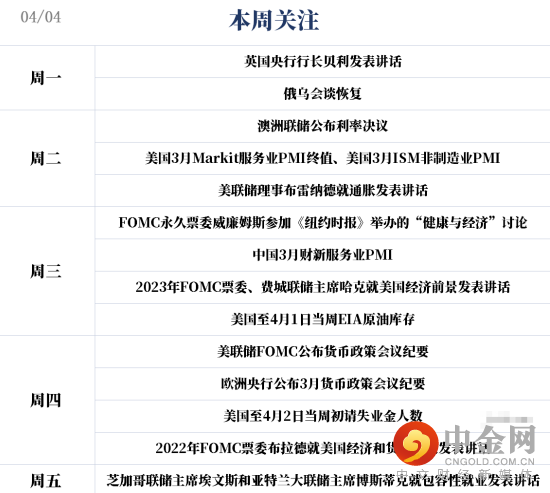
Figure 13 Follow this week






举报电话: 13816368049